
Roofing service · Yorkshire
Lead work andflashings acrossDoncaster and Yorkshire
Correctly coded, formed and dressed lead is what keeps a roof's joints watertight for decades. We replace failed flashings, soakers and saddles properly, no mortar fillets, no mastic, no repeat visits.
Free assessment · Code-correct lead formed on site · Fully insured
Service overview
Lead workexplained properly
What the service is
Lead work is the detailing that seals every junction on a roof: where the roof meets a chimney, an abutment wall, a parapet, a dormer cheek or a valley. We form and dress lead on site to the correct code for the detail, chase it into the masonry and fix it so it can move with temperature without splitting.
Who it's for
Anyone with a leak at a junction rather than in open roof, owners of period properties with original lead reaching the end of its life, and homeowners who've had a flashing 'repaired' with mortar or sealant and are watching it fail again.
When you need it
Water is coming in where the roof meets a wall or a chimney. The flashing looks lifted, split, cracked along a fold, or has slipped out of the joint. Someone has previously run a mortar fillet or a bead of mastic where lead should be. Or you're having a re-roof and want the details done properly rather than reused.
Why it needs a roofer
Lead expands and contracts significantly with temperature. If it's the wrong code, cut too long, or fixed rigidly, it fatigues and splits along the fold, which is why so many flashings fail at the same point. Correctly sized bays, correct code, correct fixing and correct dressing are what make the difference between a detail that lasts decades and one that leaks in three years.
What ignoring it costs
Left alone, thisgets more expensive
Flashing failures are small, cheap to fix, and responsible for a large share of the internal damage we're called to.
How the damage escalates
- A split flashing puts water directly into the roof structure at the junction: the hardest place to inspect and the easiest place for rot to spread unseen.
- Water entering at an abutment travels down inside the cavity or the wall, appearing as damp a floor below and getting misdiagnosed as rising damp.
- Mortar fillets crack every winter and hold water against the brickwork, accelerating spalling.
- Mastic repairs bond to dirt rather than metal and peel within a season or two, but they hide the real fault in the meantime.
- Undersized lead fatigues and splits along the same fold repeatedly, so the leak returns after every 'fix'.
Mistakes that make it worse
- Using sealant as a permanent flashing repair.
- Replacing lead with a cement fillet because it's quicker, it's the single most common bodge we take out.
- Fitting lead in over-long bays that then buckle and split from thermal movement.
- Choosing too light a code for a heavily weathered detail.
- Leaving old flashings in place during a re-roof, so a brand-new roof leaks at the chimney.
Our process
Five steps fromfirst call to sign-off
- 01
Free assessment
Jamie inspects the junction, identifies whether the lead has split, slipped, been undersized or replaced with mortar, and checks where the water is actually tracking.
- 02
Specification
The detail is specified properly: the code of lead, the bay lengths, the type of flashing (apron, step, soaker, saddle, back gutter) and how it will be fixed into the masonry.
- 03
Written quote
Scope in writing before anything starts, including removal of any previous mortar or mastic repairs.
- 04
Forming and dressing on site
Lead is cut, formed and dressed to the profile of your roof and masonry, chased into joints, wedged and pointed, with correct laps and allowance for movement.
- 05
Check, photos and sign-off
The detail is checked, and old materials taken away.
What you get
Specific outcomes,not vague promises
A permanent detail, not a seasonal patch
Correct code, correct bays and correct fixing means the flashing works with thermal movement instead of failing because of it.
The right fix for the actual fault
Junction leaks get traced and detailed properly rather than smeared over and re-visited.
Protects masonry as well as roof
Removing mortar fillets stops water being held against brickwork through freeze-thaw.
Adds decades, not seasons
Properly installed lead is one of the longest-lived materials on any roof.
Suits period property
Traditional detailing formed on site matches the building rather than fighting it.
Insured and evidenced
£2m public and £10m employers' liability, plus photographs of the finished detail.
In detail
Materials, methodsand where they apply
Lead work is defined by details, and each one has its own correct method. Getting the code, the bay length and the fixing right is the whole job: the material itself will outlive most of the roof if it's installed correctly.
Materials we use
- Milled lead sheet in the code appropriate to each detail
- Lead wedges and pointing for chased joints
- Patination oil to prevent early staining of masonry below
- Soakers for slate and plain-tile abutments
- Back gutters and saddles for chimneys and ridge junctions
- Compatible fixings that allow the sheet to move
How we do the work
- Bay lengths kept within limits so thermal movement doesn't fatigue the sheet
- Lead chased a proper depth into brick or stone joints and wedged, then pointed
- Step flashings cut to the coursing rather than raked across it
- Soakers interleaved with the covering, not laid over it
- Welts, laps and drips formed to shed water rather than trap it
- Removal of previous mortar fillets and mastic before new lead goes on
Variations of this service
Chimney flashings
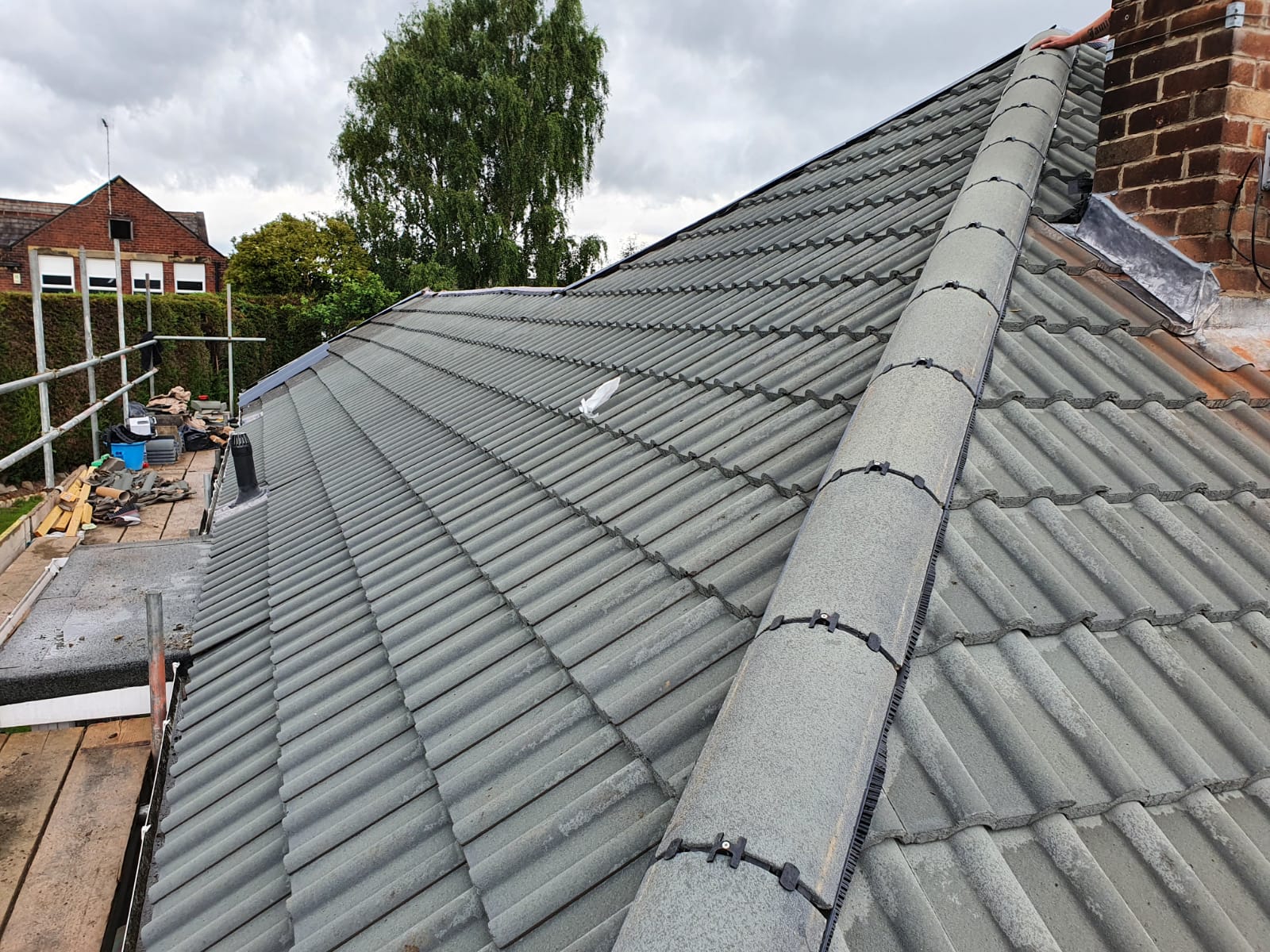
Front apron, step flashings, soakers and back gutter: the full set, formed to the stack and the roof pitch.
Abutment flashings
Where a roof meets a vertical wall, such as a lower extension roof against the main house.
Lead valleys
Valley linings formed in lead where two roof pitches meet, with correct laps and support underneath.
Soakers and saddles
Interleaved soakers for slate and plain tile abutments, and saddles where a ridge meets a wall or a hip.
Dormer and parapet detailing
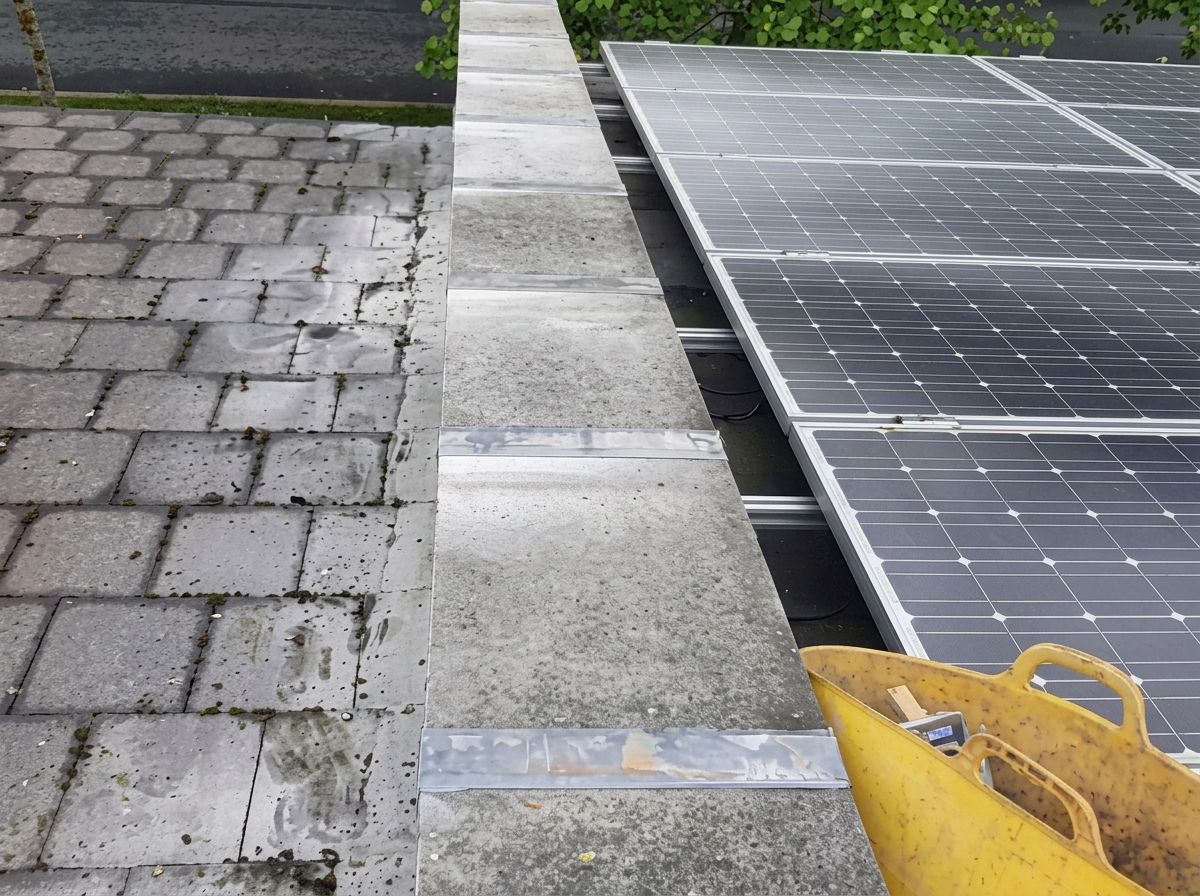
Cheeks, tops and parapet gutters where flat and pitched surfaces meet vertical faces.
Situations this applies to
- Damp appearing where a roof meets a wall or a chimney
- Visible splits along the fold line of an existing flashing
- A mortar fillet where lead should be
- Lead that has slipped out of the brick joint
- Lead work being renewed as part of a full re-roof
- Period properties where original lead has reached the end of its life
Residential and commercial
Residential lead work across Yorkshire, from terraced abutments and chimney stacks to dormers and parapets on larger period homes, plus light commercial detailing on units and outbuildings.
Roofserve Ltd is fully insured, £2,000,000 public liability and £10,000,000 employers' liability. On larger jobs payment is staged, with the final payment taken only once you're satisfied. Cash and bank transfer only.
We work from Thorne, Doncaster across South Yorkshire, West Yorkshire, North Yorkshire, East Yorkshire. Local pages for Doncaster, Thorne, Rotherham, Barnsley and other towns set out where we cover.
Questions answered
Lead workFAQs
Cost, timescales, guarantees and how the work is actually carried out. If your question isn't here, call Jamie on 07947 493640 , open 24 hours, 7 days a week.
How much does new lead flashing cost?+
Lead is priced by the detail, the length and the code required, plus access. You get a written quote after a free assessment rather than a 'from' figure.
How long does lead work take?+
Most single-detail flashing renewals are completed in a visit once access is arranged. Multiple details or a full chimney set take longer, and the timescale is confirmed in the quote.
Why not just seal it with mastic?+
Mastic bonds poorly to weathered lead and dirty masonry and fails within a season or two, while hiding the real fault. It also makes the eventual correct repair messier.
How long does lead flashing last?+
Correctly coded, sized and fixed lead is one of the longest-lasting materials on a roof, routinely decades. Failures almost always come from installation faults, not the metal itself.
Can you remove an existing mortar fillet and replace it with lead?+
Yes, and it's one of the most worthwhile upgrades on an older property. The fillet is taken out, the joint chased, and lead formed and dressed in properly.
Do you form the lead on site?+
Yes. It's cut, formed and dressed on site to the actual profile of your roof and masonry.
Is lead work included in a re-roof?+
On a full re-roof, flashings and details are re-formed as part of the job, reusing tired lead inside a new roof is a false economy.
Can you attend an urgent flashing leak?+
We're open 24 hours a day, 7 days a week, and active leaks are assessed as a priority.
Will new lead stain my brickwork?+
New lead can run and stain if it isn't treated. Patination oil is applied to prevent that on visible details.
Which areas do you cover?+
South, West, North and East Yorkshire, including Doncaster, Thorne, Rotherham, Barnsley, Sheffield, Wakefield, Leeds and Selby.
Next step
Get the junctiondetailed properlyand leave it fixed
Free assessment, code-correct lead formed and dressed on site, and photographic evidence of the finished detail. Speak to Jamie directly.
Prefer to talk?
07947 493640Open 24 hours, 7 days a week. You'll speak to Jamie, the owner, not a call handler.
- £2m public and £10m employers' liability insurance
- Detailed written quotes, no 'from' pricing
- Final payment only once you're satisfied
Free assessment for potential work. Roof surveys are a separate paid service: price on enquiry.
Related roofing services
Chimney works & pointing
Chimney rebuilds, re-pointing, flashings and weatherproofing.
Valleys
Failed valleys stripped and re-formed so the busiest part of your roof stops leaking.
Roof repairs
Leaks traced, diagnosed and put right, slipped tiles, failed flashings and storm damage.
Full re-roofs & new roofs
Complete strip and re-roof to an agreed written specification, backed by a 15-year workmanship guarantee.
See all roofing services, browse the areas we cover, read about Jamie and Roofserve, or head back to the Roofserve homepage. Ready to book? Go to contact.