
Roofing service · Yorkshire
Roof valley repairsand replacementacross Doncaster and Yorkshire
Valleys carry more water than any other part of your roof, so when one fails the damage shows up inside fast. We strip and re-form failed valleys properly and re-set the tiles either side, so the busiest channel on the roof stops leaking.
Free assessment · Lead or GRP options · Fully insured
Service overview
Valleysexplained properly
What the service is
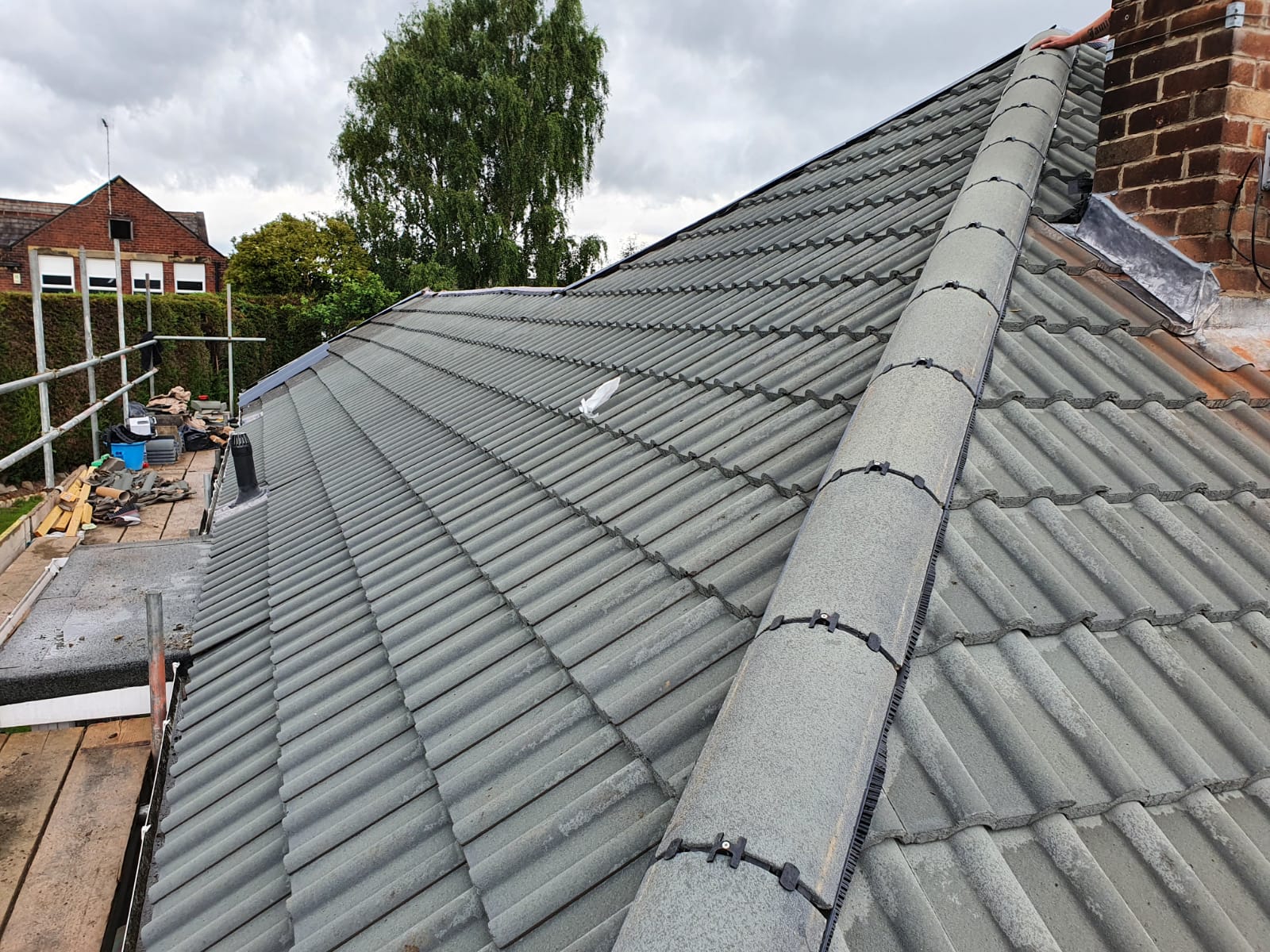
A valley is the internal angle where two roof slopes meet, and it channels the water from both of them into the gutter. Valley work means stripping out the failed lining, checking and replacing the timber support beneath, installing a new lead or GRP valley, and cutting and re-setting the tiles or slates either side so the channel is the right width and the water actually runs.
Who it's for
Owners of properties with an L-shaped roof, a rear outrigger, a hipped extension, or dormers, anywhere two pitches meet. Very common on Yorkshire terraces with back additions and on semis with side extensions.
When you need it
There's a leak on an internal wall or ceiling below the line where two roof slopes meet. You can see cracked, lifted or split lining from an upstairs window. Mortar, moss or debris is packing the channel. Tiles either side of the valley have slipped into it. Or the valley is old cement fillet or bitumen and has started to crack.
Why it needs a roofer
Valleys handle concentrated flow, so a defect that would be minor anywhere else on the roof becomes a serious leak here. They also fail out of sight: the lining is under the tiles, so the only way to know its condition is to have someone look properly. Getting the support, the laps and the tile cut right is what stops the next one failing early.
What ignoring it costs
Left alone, thisgets more expensive
A failing valley is the fastest way to get water into a roof, because everything the roof collects goes through it.
How the damage escalates
- Concentrated water at a defect soaks rafters and battens across a wide area, not a single spot.
- Valley leaks often run down internal walls, so the damage appears as blown plaster in a room rather than a drip in the loft.
- Debris and moss dam the channel, forcing water sideways under the tiles either side.
- Cement fillet valleys crack every winter and keep re-opening, however often they're pointed.
- Rotten valley boards under the lining mean the eventual repair becomes carpentry as well as roofing.
Mistakes that make it worse
- Sealing a cracked valley with mastic or bitumen paint, it lasts one season and traps water in the timber.
- Re-pointing a cement fillet valley repeatedly instead of installing a proper lined valley.
- Fitting new lining onto rotten valley boards.
- Cutting tiles too tight to the channel, so the valley can't carry the flow it was designed for.
- Ignoring debris build-up until it's dammed the channel completely.
Our process
Five steps fromfirst call to sign-off
- 01
Free assessment
Jamie inspects the valley from above and, where access allows, from inside the loft to check whether the timber below has been affected.
- 02
Diagnosis and specification
You're told whether the valley can be cleared and repaired or needs stripping and re-forming, and whether lead or GRP is the right lining for that detail.
- 03
Written quote
Scope in writing: length of valley, lining material, any timber replacement and how many courses of tile either side are being re-set.
- 04
Strip and re-form
Old lining removed, valley boards checked and replaced where soft, new lining installed with correct laps and support, tiles cut and re-set to the correct valley width.
- 05
Flow check, photos and clear-up
Channel and discharge into the gutter checked, debris cleared and site left tidy.
What you get
Specific outcomes,not vague promises
The highest-risk detail fixed
Valleys concentrate the water off two slopes; getting this one right removes a disproportionate share of leak risk.
Structure protected
Replacing soft valley boards while the lining is off stops a roofing job turning into a timber job later.
Correct flow restored
Right width, right laps and clear discharge into the gutter, so heavy Yorkshire rain has somewhere to go.
Long service life
A properly formed lead or GRP valley outlives cement fillets and bitumen repairs many times over.
Fewer callouts
No annual re-pointing of a fillet that cracks every winter.
Clear on what was done
A plain explanation of the failure and the replacement detail you can't see from the ground.
In detail
Materials, methodsand where they apply
Valley construction varies by covering and by era. Older Yorkshire properties often have open lead valleys or cement fillets; newer estate housing typically uses GRP or preformed valley troughs. The right replacement depends on the covering, the pitch and the run.
Materials we use
- Milled lead sheet in the appropriate code for open valleys
- GRP preformed valley troughs where they suit the covering and pitch
- Replacement valley boards and support timbers
- Breathable membrane dressed into the valley correctly
- Cut tiles and slates matched to the existing covering
- Clips and fixings for cut tiles along the valley edge
How we do the work
- Full strip of the failed lining rather than an overlay
- Timber support inspected and replaced where it's soft or rotten
- Lead laid in correctly sized bays with proper laps for the pitch
- Membrane dressed into the valley so water can't get behind the lining
- Tiles cut cleanly and set to leave a consistent open channel width
- Discharge into the gutter checked so water isn't shot over the edge
Variations of this service
Open lead valley
The traditional detail: lead lining with an open channel and cut tiles either side. Long-lived when the code and bay lengths are right.
GRP valley trough
A durable preformed lining suited to many modern coverings, often used where a straight run and consistent pitch make it the practical option.
Cement fillet replacement
Removing a cracked mortar fillet valley and replacing it with a properly lined valley: a permanent fix to a recurring problem.
Valley work within a re-roof
On a full re-roof, valleys are stripped and re-formed as standard so a new roof isn't built around an old failure.
Situations this applies to
- Damp on an internal wall below where two roof slopes meet
- Visible cracks or splits in the valley lining
- Moss, mortar or leaf debris damming the channel
- Tiles slipped into the valley
- Cement fillet valleys that keep re-cracking
- Rear outriggers and extensions on terraced and semi-detached houses
Residential and commercial
Mostly residential, terraces with back additions, semis with side extensions and hipped detached houses across Doncaster, Thorne and the wider Yorkshire area, plus light commercial pitched roofs with valley details.
Roofserve Ltd is fully insured, £2,000,000 public liability and £10,000,000 employers' liability. On larger jobs payment is staged, with the final payment taken only once you're satisfied. Cash and bank transfer only.
We work from Thorne, Doncaster across South Yorkshire, West Yorkshire, North Yorkshire, East Yorkshire. Local pages for Doncaster, Thorne, Rotherham, Barnsley and other towns set out where we cover.
Questions answered
ValleysFAQs
Cost, timescales, guarantees and how the work is actually carried out. If your question isn't here, call Jamie on 07947 493640 , open 24 hours, 7 days a week.
How much does a new roof valley cost?+
It's priced by the length of the valley, the lining material, any timber replacement and access. You get a written quote after a free assessment rather than a 'from' price.
How long does valley replacement take?+
A single domestic valley is usually completed quickly once access is in place, longer if valley boards need replacing. The timescale is confirmed with the quote.
Lead or GRP, which is better?+
It depends on the covering, the pitch and the run. Lead is the traditional long-life option and suits period detailing; GRP troughs work well on many modern coverings. You'll get a recommendation for your roof rather than a default.
How long does a properly formed valley last?+
Decades, when the lining is correctly sized and supported and the tiles are cut to leave the right channel width. Cement fillets and bitumen patches do not.
Can a valley be repaired instead of replaced?+
Sometimes, if the lining is sound and the problem is debris, a slipped tile or a localised defect. If the lining has failed along the run, replacement is the honest answer and that's what you'll be told.
Will you check the timber underneath?+
Yes. Valley boards are exposed during a strip and replaced where they're soft or rotten, which is the only sensible time to do it.
Is valley work urgent?+
It's high priority. Valleys carry concentrated water, so failures cause internal damage quickly. Active leaks are assessed as a priority, 24 hours a day.
Why does my valley keep blocking?+
Overhanging trees, moss shedding off the covering and mortar debris from failing ridge or verge work all dam valleys. We clear the cause as well as the symptom where we can.
Which areas do you cover?+
South, West, North and East Yorkshire, including Doncaster, Thorne, Rotherham, Barnsley, Sheffield, Wakefield, Leeds and Selby.
Next step
Fix the valleybefore it soaksthe room below
Free assessment, an honest answer on repair versus replacement. Call Jamie directly.
Prefer to talk?
07947 493640Open 24 hours, 7 days a week. You'll speak to Jamie, the owner, not a call handler.
- £2m public and £10m employers' liability insurance
- Detailed written quotes, no 'from' pricing
- Final payment only once you're satisfied
Free assessment for potential work. Roof surveys are a separate paid service: price on enquiry.
Related roofing services
Lead work
Code-correct lead flashings, soakers and saddles formed and dressed on site.
Roof repairs
Leaks traced, diagnosed and put right, slipped tiles, failed flashings and storm damage.
Full re-roofs & new roofs
Complete strip and re-roof to an agreed written specification, backed by a 15-year workmanship guarantee.
Guttering
New guttering fitted and set to fall properly, protecting walls and foundations.
See all roofing services, browse the areas we cover, read about Jamie and Roofserve, or head back to the Roofserve homepage. Ready to book? Go to contact.